Watercolor Painting of "Yellow Trees"
Step by step watercolor painting demonstration by Roland Lee

I did this painting as a demonstration of "Back Painting" or "Negative Painting" in one of my two-day watercolor workshops. Of course the watercolorist needs to master this technique in order to become competent in the medium of transparent watercolor.
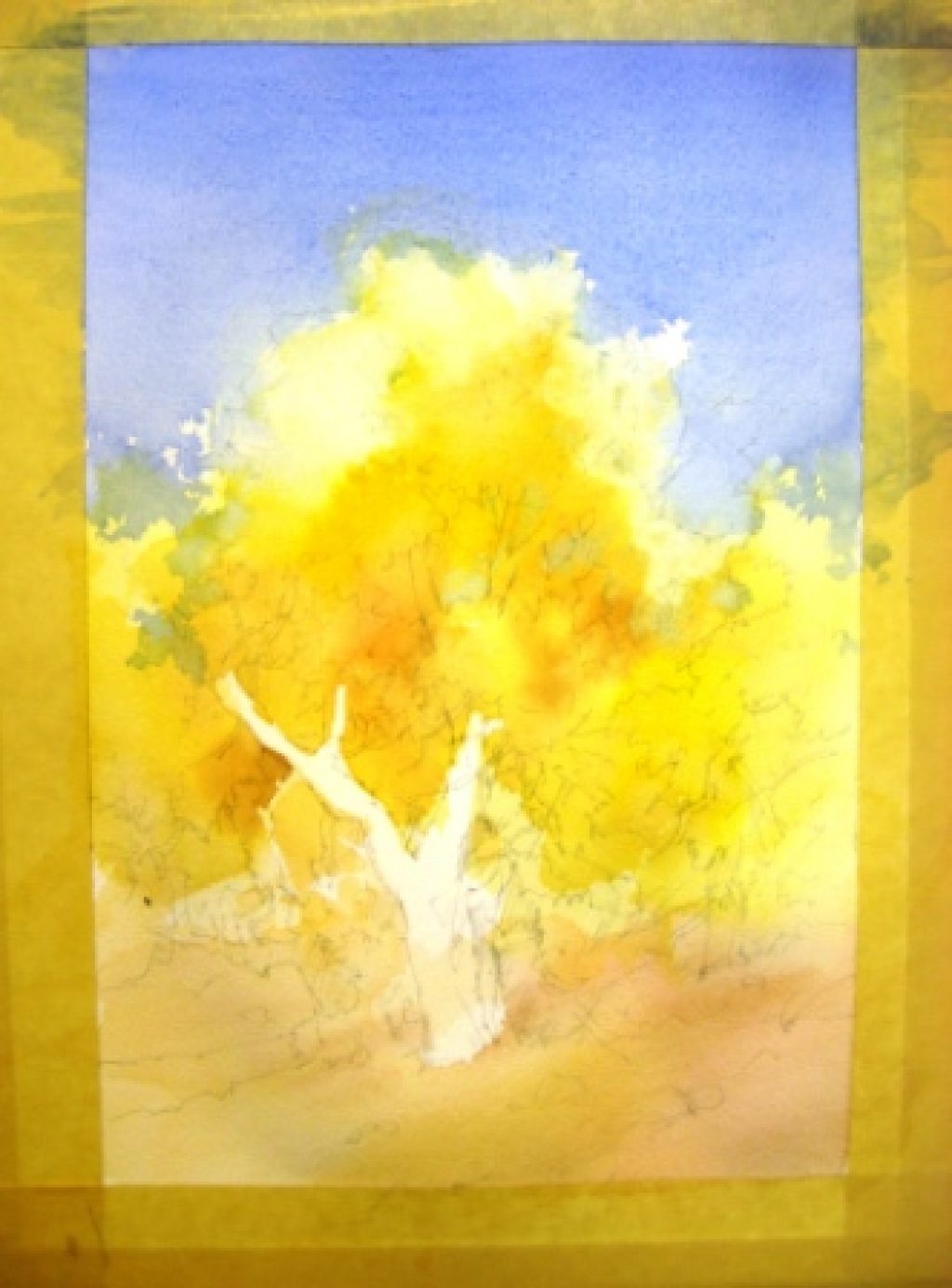
1. I am using a small 8 x 12 sheet of Arches cold press watercolor paper for this class demo. This is a cottonwood tree in Zion National Park. At the peak of fall the Cottonwoods glow a brilliant yellow. I thought this would be a good subject for a demonstration on using negative painting in transparent watercolor.


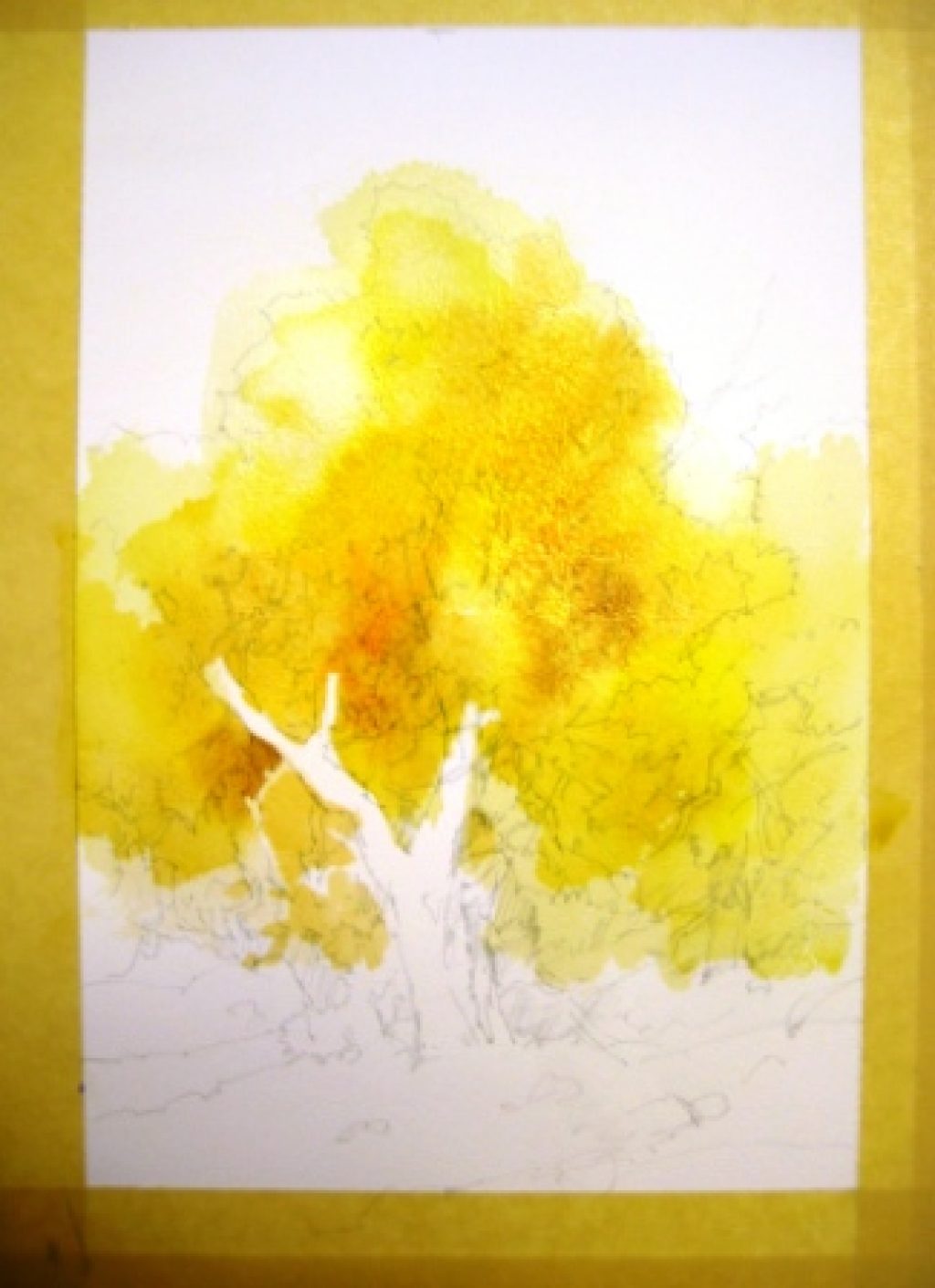
2. A light pencil sketch helps me find the edges. Since I am working from light to dark, there is no need to "stay in the lines" on the yellow foliage, so I rough it in with bold washes of new gamboge, and Quinacridone Gold. I also drop in a little cad Red light and let the pigments blend freely as I work.

The paper is dry so can cut around the tree trunk and branches leaving the whites that I will need later.


3. While the foliage is drying below I quickly lay in a graded wash for the sky area using Ultramarine blue and yellow Ochre. While the sky is drying I lay in the ground area using a very light wash of cad Red light and yellow ochre. A touch of Ultramarine dulls the color slightly.


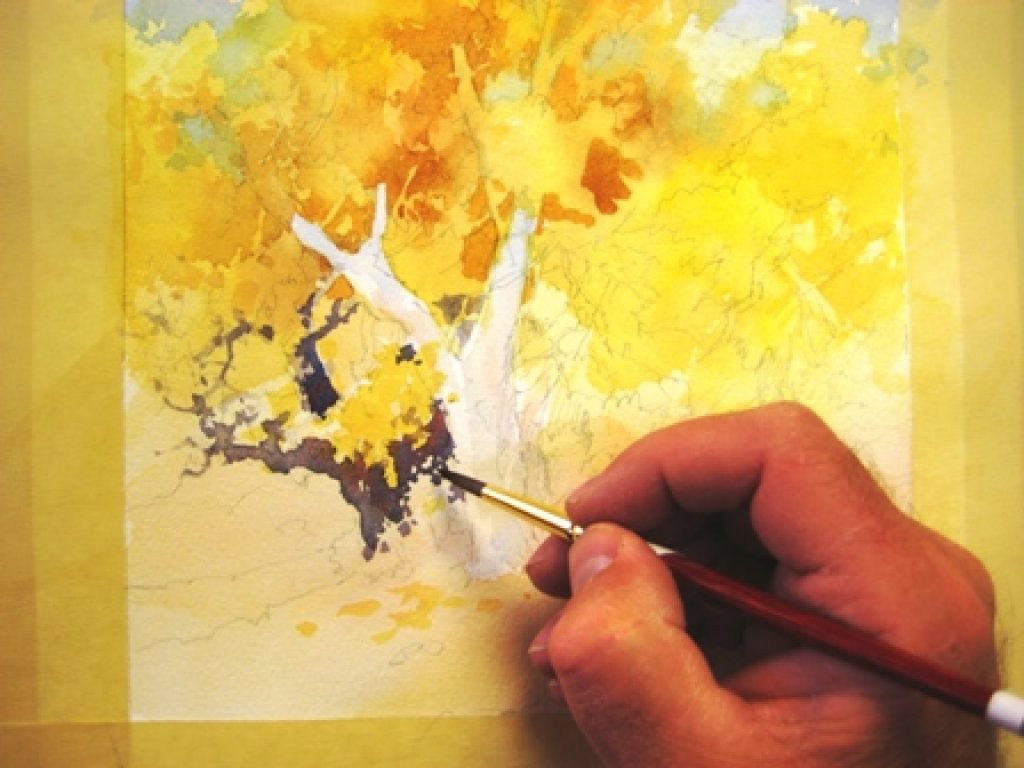
4. Now I move back to the foliage and start to shape some of the bigger shapes in the canopy using some reds to give warmth to the shadows. I still have more work to do on the foliage, but need to apply my darkest darks so I can evaluate how dark I can go on the shadow areas.

I am using a smaller brush on dry paper so I can cut around a few individual leaves and branches. At this point I now have some very light trunks and some very dark ones. They look flat because I haven't added form shadows and cast shadows. When I do, they will take on a three-dimensional form.


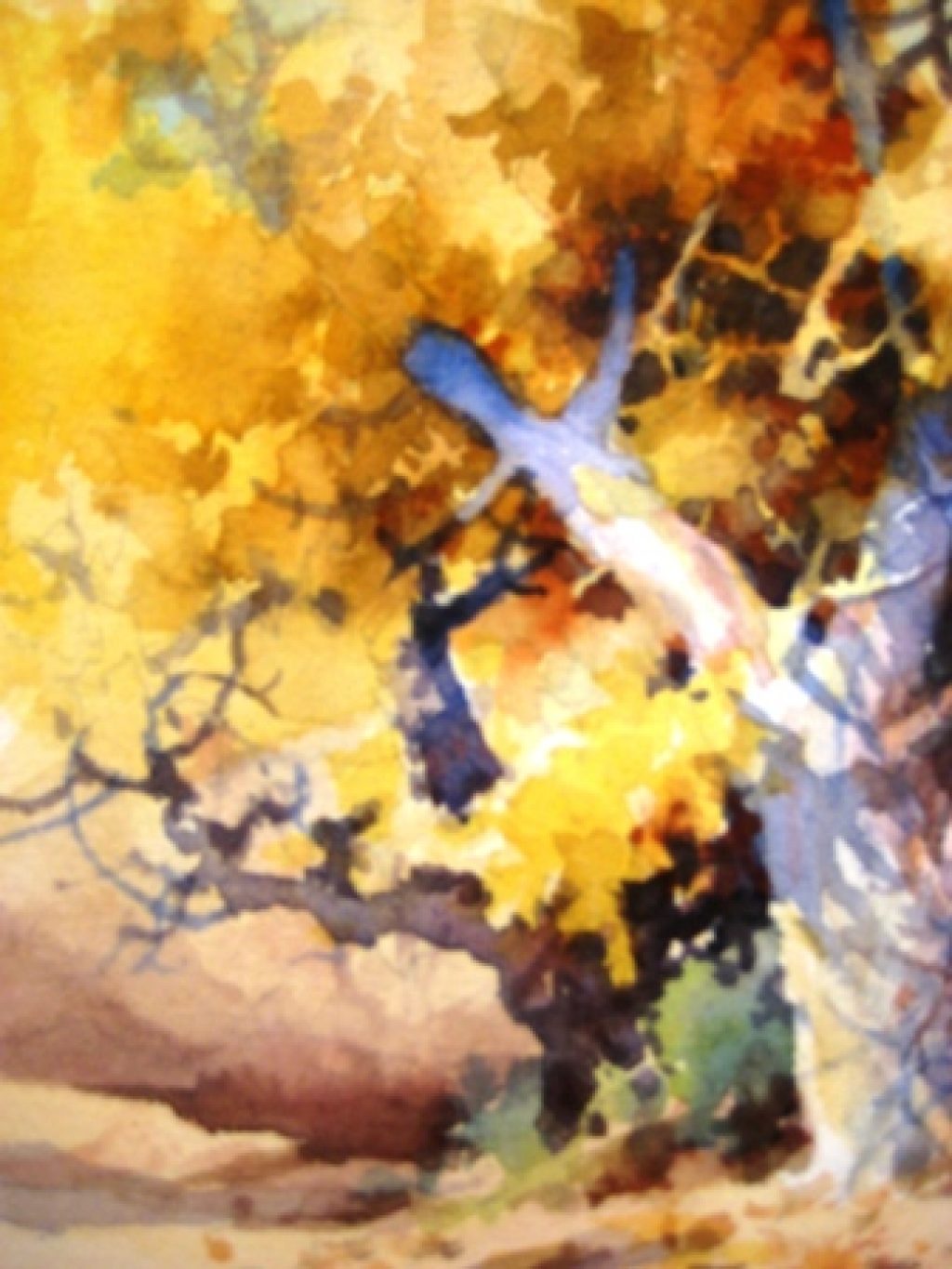
5. I use blues and purples to apply the cast shadows on the trunks and branches, and darken up some of the foliage. Now we are starting to see the tree take shape.


6. I continue to add darks until I bring the painting to the degree of focus and realism that pleases me. Notice how important the play of light and shadow is on the tree trunk. It's just a simple tree, but using patterns of light and dark creates an interesting composition.